

Cruise injury cases are often won or lost in the first hours. The ship's crew writes the incident report, controls the video and leaves port with the witnesses. Here is a practical checklist for what to do on board, when you get home to New Jersey or New York, and before the ticket's deadlines run.
The five things that matter most
- Get medical care and a copy of your shipboard medical records.
- Photograph the scene before it's cleaned or changed.
- Get witnesses' names and cabin numbers.
- Report the injury and ask for a copy of the report.
- Find your ticket contract and note the 6-month notice and 1-year lawsuit deadlines (46 U.S.C. § 30526).
On board: the first hour
- Get medical help. Go to the ship's medical center, even if you think the injury is minor. It creates a record dated the day of the injury.
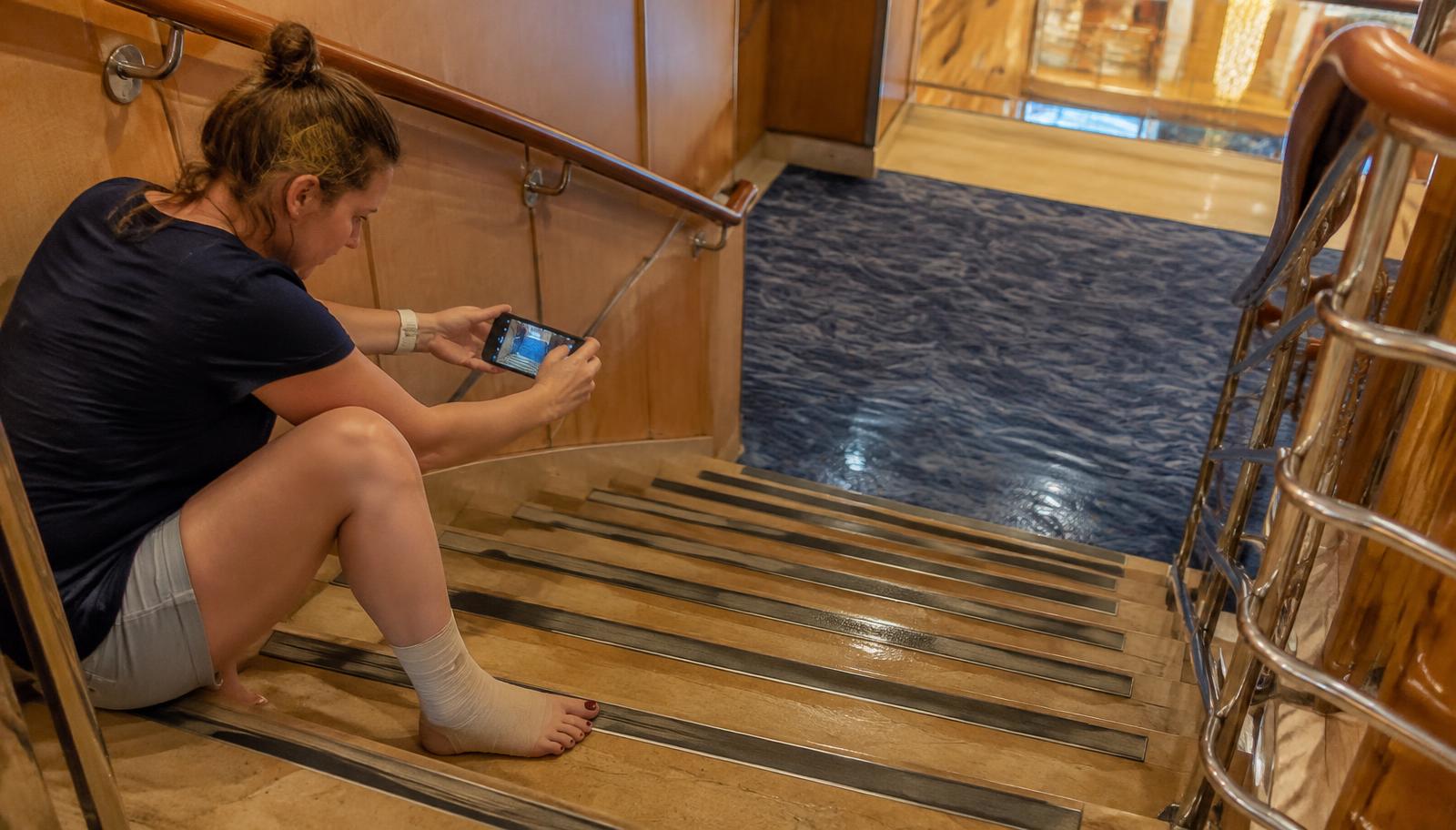
- Take photos and video of the exact spot: water, food, a broken step, poor lighting, missing handrail, any warning sign or the lack of one. Include your shoes and a wide shot showing where you were.
- Ask witnesses for their names, cabin numbers, phone numbers and email. Other passengers scatter at the end of the cruise.
- Note crew names of anyone who responded, cleaned up or made statements.
On board: before you leave the ship
- Report the incident to guest services or security. Ask for a copy of the report. If they won't give one, write down who took it and when.
- Be careful what you sign. Read any statement before signing, and don't sign anything that describes the accident in a way you disagree with.
- Request your medical records from the ship's medical center and keep the bills.
- Save the ship's daily program, any notices about weather or illness, and your onboard account statement.
- Ask that video be preserved. Covered cruise ships must keep a video surveillance system (46 U.S.C. § 3507(b)), but footage can be recorded over. Your lawyer should also send a written preservation letter quickly.
At the terminal and the trip home
If you're hurt during disembarkation at Cape Liberty, Manhattan or Brooklyn, report it to both the terminal and the cruise line. Different companies may be responsible for different areas, with different deadlines. See injuries at Cape Liberty or a NYC terminal.
Once you're home
- See your own doctor promptly and follow up on everything the ship's doctor told you.
- Keep a simple journal of pain, limits and missed work.
- Gather your paperwork: booking confirmation, boarding passes, ticket contract, receipts and excursion confirmations.
- Back up your photos with their original dates.
- Don't post about the accident on social media. Cruise lines look.
- Be cautious with the cruise line's claims department. You don't have to give a recorded statement before getting advice.
Find the ticket contract
Your ticket contract is usually linked in your booking confirmation or online cruise account. Look for:
- notice: how and where to send written notice of an injury claim, often within 6 months;
- suit deadline: usually 1 year from the date of injury;
- forum: which court you must sue in, often federal court in Miami.
See cruise injury claim deadlines and why your ticket says Miami. When the ticket requires suit in another state, the case may involve co-counsel admitted there.
Checklists for specific injuries
- Falls on decks, stairs and pools: cruise ship slip and falls.
- Tender and gangway falls: tender and gangway accidents.
- Illness: norovirus and food poisoning.
- Poor medical care: ship doctor malpractice.
- Excursions: shore excursion injuries.
- Assault: sexual assault on cruise ships.
For a free review of your situation, see our cruise ship injury lawyer page.
General information, not legal advice. Every ticket contract is different; read the version that applied to your sailing.