
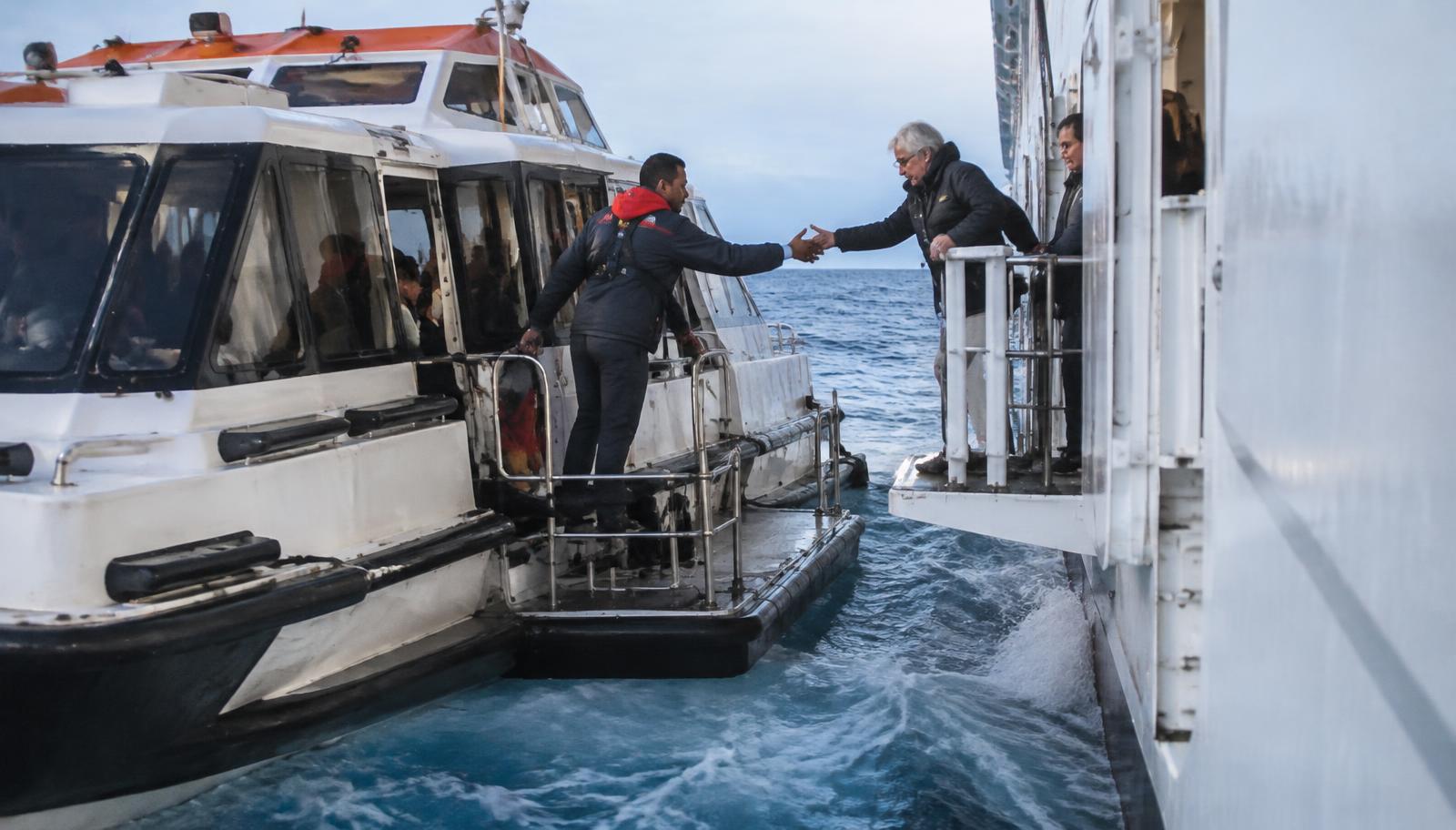
Getting on and off the ship is one of the riskiest moments of a cruise. At some ports passengers board small tender boats that rock beside the ship. At every port they cross a gangway that shifts with the tide. When the crew doesn't manage those crossings carefully, passengers fall, get crushed or end up in the water.
The short answer
- The cruise line owes reasonable care during boarding, tendering and disembarking (Kermarec v. Compagnie Generale Transatlantique, 358 U.S. 625 (1959)).
- A tender is a vessel, and the gangway is traditionally treated as part of the ship (Victory Carriers, Inc. v. Law, 404 U.S. 202 (1971)), so maritime law usually applies.
- Choppy water, wet steps, gaps, missing handholds and rushed crews are common causes.
- The ticket's deadlines usually apply: written notice within 6 months, suit within 1 year.
Tender accidents
Tenders are often the ship's lifeboats or local launches, used where the ship anchors offshore. Typical injuries happen while stepping across the gap between the ship's platform and a moving tender, or while the tender bumps against the ship or the pier. Questions to ask:
- Was the sea state too rough to tender safely, and did the captain consider suspending tender service?
- Were crew members positioned on both sides to steady passengers?
- Were older passengers or people using canes or wheelchairs offered help?
- Were the steps and platform wet, poorly lit or missing non-slip surfaces?
- Did the tender driver throttle or pull away before passengers were seated?
If the tender is run by a local company rather than the cruise line, see shore excursion injuries for how responsibility can still reach the cruise line.
Gangway accidents
Gangways change angle with the tide and the ship's load. They can become steep, slippery in rain, or misaligned with the pier. Common problems include missing or loose handrails, raised thresholds, gaps between sections and crowds pushing to board.
Courts have long described the gangway as the rough line between land and sea law. Injuries there are usually maritime claims against the cruise line, subject to the ticket. An injury a few steps away in the terminal building may instead be a state-law claim against the terminal operator or property owner, with different deadlines. See injuries at Cape Liberty or a NYC terminal.
Proving notice
In the federal court in Miami, where most passenger cases are filed, a passenger generally must show the cruise line knew or should have known about the dangerous condition (Keefe v. Bahama Cruise Line, 867 F.2d 1318 (11th Cir. 1989)). Evidence that helps:
- the ship's logs on weather and sea state when tendering;
- the cruise line's own tendering and gangway procedures;
- prior incidents on the same tender, gangway or port;
- video from the ship's surveillance system, which covered ships must keep (46 U.S.C. § 3507(b)).
Warnings can cut both ways. The Eleventh Circuit has held a cruise line's warning sign can show it knew of the danger (Guevara v. NCL (Bahamas) Ltd., 920 F.3d 710 (11th Cir. 2019)).
Passengers with disabilities
Title III of the Americans with Disabilities Act applies to foreign-flag cruise ships in U.S. waters to a significant extent (Spector v. Norwegian Cruise Line Ltd., 545 U.S. 119 (2005)). If you use a wheelchair or mobility aid and the crew didn't provide reasonable help boarding, that may matter to both an injury claim and an accessibility complaint.
Deadlines and court
Expect written notice within 6 months and a lawsuit within 1 year (46 U.S.C. § 30526), in the court named in the ticket, often federal court in Miami, which may involve co-counsel admitted there. See cruise injury claim deadlines and our cruise injury evidence checklist.
More on passenger claims: cruise ship injury lawyer.
General information, not legal advice. Liability depends on who operated the tender or gangway and the conditions at the time.