
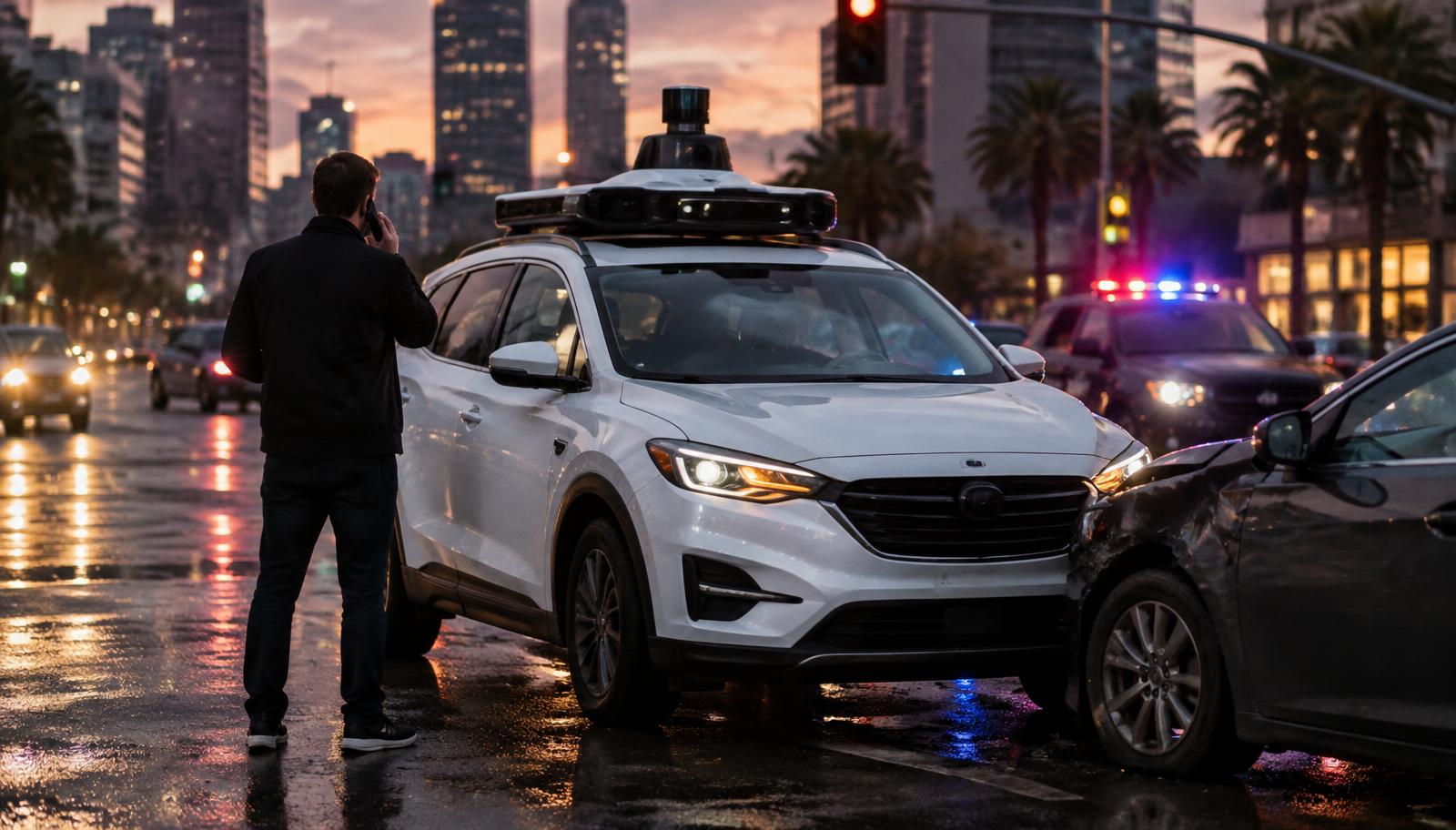
Self-driving test vehicles usually carry a human "safety driver" or "backup driver" who is supposed to take over when the system fails. When one of these vehicles crashes, people ask: is the safety driver at fault, the company that employs them, or the technology? In New Jersey the answer can be all three.
Who may be responsible
- The safety driver, for failing to watch the road or take control in time.
- The employer or operator (for example a rideshare or autonomous-vehicle company), for a safety driver acting within the scope of the job, and for its own negligent training, supervision or policies.
- The vehicle or software maker, under New Jersey's Products Liability Act (N.J.S.A. 2A:58C-1 and following), if the system was defectively designed or lacked adequate warnings.
- Other drivers, if they contributed to the crash.
The safety driver's duty
A backup driver is still a driver. New Jersey's rules of the road and ordinary negligence law apply. A safety driver who looks at a phone, dozes off or fails to brake when the system misses a hazard can be found negligent, just like any other driver. A well-known 2018 Arizona crash, in which an Uber test vehicle struck and killed a pedestrian while its safety driver was looking away, led to criminal charges against the driver and federal findings about both the driver and the company's safety culture.
The company's responsibility
Under the long-standing rule of respondeat superior, an employer is generally responsible for the negligence of an employee acting within the scope of employment. A company running test vehicles may also be directly liable for:
- Inadequate training or unrealistic shift lengths for safety drivers.
- Disabling safety features or not monitoring driver attention.
- Putting a vehicle on public roads before the system was ready.
When the technology is the problem
If the automated system failed to detect a pedestrian, braked unexpectedly or steered out of the lane, a product-liability claim may lie against the manufacturer or software developer. These cases depend on the vehicle's data: sensor logs, camera footage and records of when the system was engaged and when it alerted the driver. That data must be preserved quickly. See our self-driving car accident page.
Is it a rideshare case?
If the vehicle was carrying a paying passenger through a rideshare app, New Jersey's rideshare insurance rules may also apply, including the $1.5 million coverage requirement during trips (N.J.S.A. 39:5H-10). See why Rasier LLC appears on Uber claims and who is liable in an Uber accident.
Shared fault
New Jersey divides responsibility among everyone at fault under its comparative negligence law (N.J.S.A. 2A:15-5.1). A jury can assign percentages to the safety driver, the company, the manufacturer and anyone else, and an injured person can recover if they were 50% or less at fault. See comparative negligence in New Jersey.
What to do after a crash with a test vehicle
- Photograph the vehicle, including any company markings and roof sensors.
- Get the safety driver's name and the company's name from the police report. See how to read a NJ crash report.
- Ask a lawyer to send a preservation letter for the vehicle's data right away.
- Remember the general two-year filing deadline (N.J.S.A. 2A:14-2).
General information, not legal advice. Laws on automated vehicles are changing quickly.