

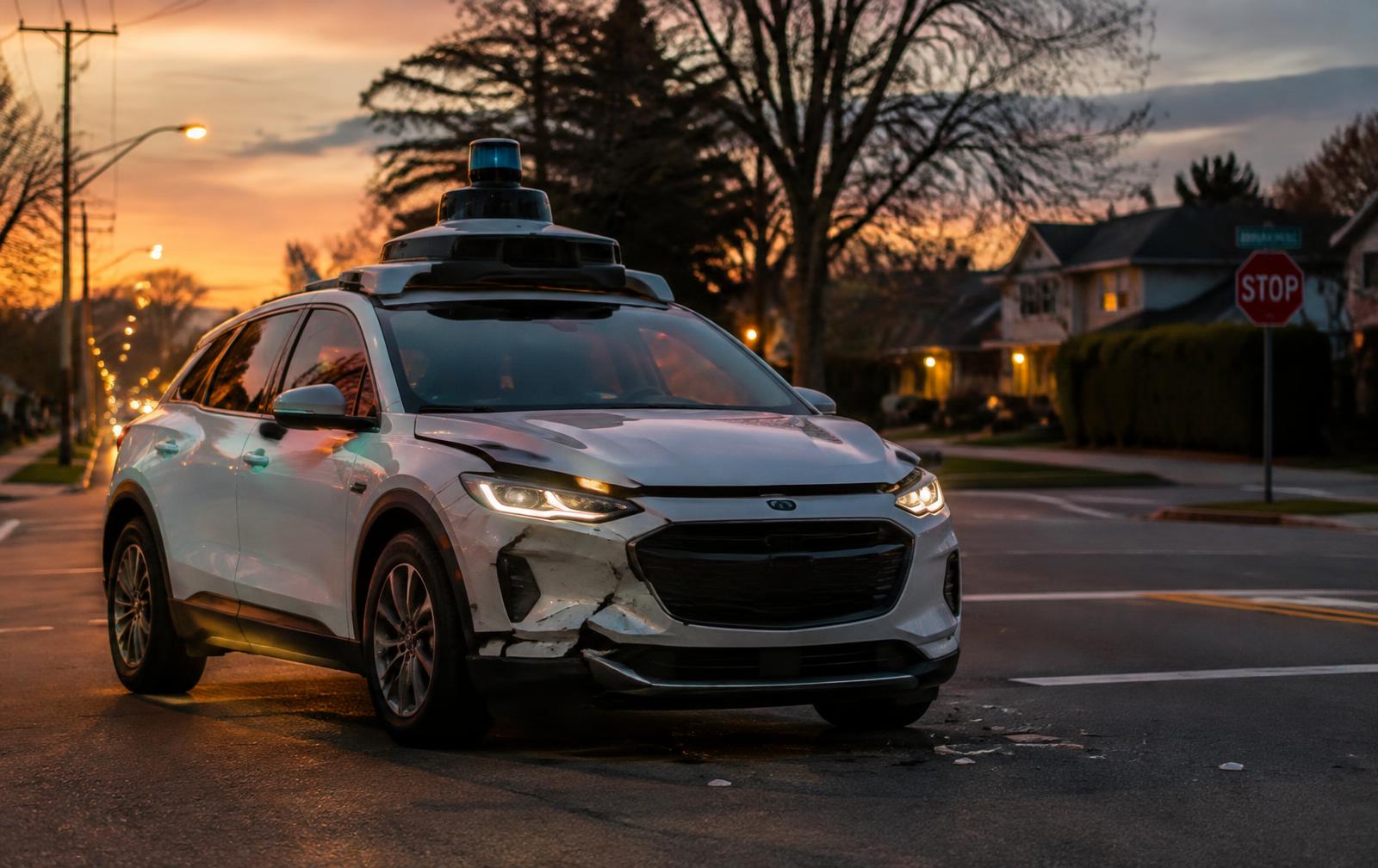
The car was driving.
Someone is still responsible.
Crashes involving lane-keeping, adaptive cruise, Autopilot-style systems and autonomous test vehicles raise a new question: was it the driver, the software, or both? We find out from the vehicle's own data.
Quick answers
How long do I have to file a self-driving car accident claim in NJ?
In most New Jersey self-driving car accident cases you have two years from the date of the injury to file a lawsuit under N.J.S.A. 2A:14-2. If a town, county, state agency or NJ Transit may be responsible, a written notice of claim is generally due within 90 days.
Waiting also costs evidence: video is overwritten, vehicles are repaired and witnesses move. Calling early protects both the deadline and the proof.
Who is responsible when a self-driving or driver-assist car crashes?
Today's cars with Autopilot-style features still require an attentive driver, so the driver is usually responsible. The manufacturer can also be responsible under the New Jersey Product Liability Act, N.J.S.A. 2A:58C-1, if a design or warning defect in the software or sensors helped cause the crash.
Vehicle data recorders and the maker's logs are critical and should be preserved quickly.
Who pays my medical bills after a New Jersey car crash?
New Jersey is a no-fault state, so your own auto policy's Personal Injury Protection (PIP) coverage usually pays your medical bills first, no matter who caused the crash. Pain and suffering, lost wages beyond PIP and future losses are pursued from the at-fault driver's liability insurance.
If you have no auto policy, PIP may come from a household member's policy or from the policy of the vehicle involved under N.J.S.A. 39:6A-4.
What is New Jersey's verbal threshold, and does it apply to me?
Many New Jersey auto policies include a limitation on lawsuit option, called the verbal threshold. If yours does, you can recover pain and suffering only for injuries listed in N.J.S.A. 39:6A-8(a), such as a displaced fracture, significant scarring, or a permanent injury confirmed by a doctor's certification.
Your declarations page shows which option you chose. Lost wages and economic losses are not limited the same way.
How much does it cost to hire Dennis?
Nothing up front. The consultation is free, and injury cases are handled on a contingency fee, which means the fee is a percentage of the recovery and is only owed if there is one. New Jersey Court Rule 1:21-7 caps contingency fees in personal injury cases.
You will get the fee agreement in writing before any work starts, and you can ask questions about it at any time.
Driver, maker,
or software.
Most cars sold today with "self-driving" features are driver-assist systems. The human driver must still watch the road and take over. When a driver relies on the system and stops paying attention, the driver is usually at fault, just as in any other crash.
When the system itself fails, such as phantom braking, failing to detect a pedestrian or steering out of a lane, the vehicle manufacturer or a software or sensor supplier may also be responsible under New Jersey's Products Liability Act (N.J.S.A. 2A:58C-1 and following).
The case starts
on day one.
Every self-driving car accidents matter is treated as a litigation file from the first call — because that's what wins it.
No fee unless we win.
You owe us nothing unless we recover for you. Period.
Cash advance in 24 hours.
Same-day funding can be arranged through third-party sources while your case is built.
Free, confidential case review.
An attorney — not an intake screener — reviews your matter and tells you what it's worth.
24/7 line, real people.
Evidence disappears in days. We answer the phone the night it happens.
Hurt in New Jersey?
Tell us what happened.
A New Jersey attorney personally reviews every submission — typically within the hour. No fee. No obligation. Evidence preservation begins the moment we hang up.
- Statewide coverage — every NJ county
- Preservation letters issued same day
- In-house investigation team
- Available 24/7 — nights, weekends, holidays
Request your free
consultation.
Dennis Shlionsky's Team will personally review your matter — typically within one hour. There is no fee unless we win.
What the car remembers.
Vehicles with driver-assist systems record far more than ordinary cars: camera footage, sensor logs, whether the system was engaged, and when it asked the driver to take over. Much of that data sits with the manufacturer, and some of it can be overwritten.
- Preservation letters. We send written demands to the driver, owner and manufacturer to keep the vehicle and its data.
- Federal crash reports. NHTSA's crash-reporting order requires manufacturers to report certain crashes involving these systems, and recalls can show a known defect.
- Expert download. Engineers retrieve and interpret the event data so a jury can see what the system did, second by second.
Insurance first, product claim second.
Your own PIP coverage still pays medical bills first, and the at-fault driver's auto policy is still a source of recovery. A product-liability claim against the manufacturer is a separate claim that can add significant value when the technology failed.
What clients ask first.
If the car was on Autopilot, is the driver still at fault?
Usually the driver is still responsible for watching the road, because these systems require supervision. But fault can be shared: if the system malfunctioned or was marketed in a misleading way, the manufacturer may also be liable.
Are fully driverless cars allowed on New Jersey roads?
Driverless deployment is still limited and the law is changing. Whatever the vehicle, ordinary New Jersey negligence and product-liability rules apply to injuries it causes.
How much does it cost to hire your firm?
Nothing up front. We work on a contingency fee — you owe us no attorney's fee unless we recover money for you. Costs are advanced by the firm and only reimbursed out of a recovery. The first conversation is free and confidential.
How long do I have to file a claim in New Jersey?
Most personal-injury claims in New Jersey carry a two-year statute of limitations under N.J.S.A. 2A:14-2, running from the date of injury. Claims against a public entity (city, county, NJ Transit, the State) require a Notice of Tort Claim within 90 days under the New Jersey Tort Claims Act. Wrongful-death actions also have a two-year window. Call as early as possible — evidence does not wait.
The data
won't wait.
Vehicle data can be overwritten or the car repaired within days. Call so it can be preserved.
Request your free
consultation.
Dennis Shlionsky's Team will personally review your matter — typically within one hour. There is no fee unless we win.
Prior results do not guarantee a similar outcome. Each case turns on its own facts. The information on this page is for general educational purposes and is not legal advice. Contacting the firm does not create an attorney-client relationship.