
After an Uber or Lyft crash in New Jersey, money can come from several places: your own PIP coverage, the at-fault driver's insurance, and the rideshare insurance New Jersey requires during a trip. What you can recover depends on what the driver's app showed, whether your injury meets the lawsuit threshold, and how fault is split.
The short answer
- PIP pays first for medical bills in most New Jersey crashes, no matter who was at fault (N.J.S.A. 39:6A-4).
- A claim against the at-fault driver can add lost income beyond PIP, uncovered medical costs and pain and suffering.
- During an active trip, New Jersey requires at least $1.5 million in liability coverage (N.J.S.A. 39:5H-10(c)).
- Rideshare passengers usually aren't limited by the "limitation on lawsuit" threshold in a suit against the company and its driver (N.J.S.A. 39:5H-10(j)).
1. What PIP covers
New Jersey is a no-fault state. If you have your own auto policy, or live with a relative who does, that policy's Personal Injury Protection usually pays your medical bills first. PIP can also pay some lost income and essential services up to the limits you chose. Because PIP pays those bills, you generally can't collect the same bills again from the at-fault driver (N.J.S.A. 39:6A-12).
2. What a claim against the at-fault driver adds
- Income loss beyond PIP: wages and earning capacity above what PIP paid.
- Medical costs PIP doesn't pay: bills over your PIP limit, and future care.
- Pain and suffering: physical pain, emotional distress and loss of enjoyment of life.
- A spouse's claim for loss of companionship and household help, in some cases.
3. The lawsuit threshold
Many New Jersey drivers chose the cheaper "limitation on lawsuit" option. It lets you sue for pain and suffering only if your injury fits a category in N.J.S.A. 39:6A-8(a), such as a permanent injury or a displaced fracture. New Jersey's rideshare law changes this for passengers: in a lawsuit arising from a prearranged ride, the rideshare company and its driver can't raise that threshold against a passenger, and it can't be raised against anyone who isn't receiving PIP benefits (N.J.S.A. 39:5H-10(j)).
4. Which insurance pays: it depends on the app
- App off: only the driver's personal policy.
- App on, no ride accepted: at least $50,000 per person and $100,000 per crash for injuries (N.J.S.A. 39:5H-10).
- Ride accepted through drop-off: at least $1.5 million in liability coverage and $1.5 million in uninsured and underinsured motorist coverage (N.J.S.A. 39:5H-10(c)).
If another car caused the crash, that driver's insurer is responsible. When that driver has little or no insurance, the rideshare uninsured/underinsured coverage can fill the gap during a trip.
5. What can reduce a recovery
- Shared fault: New Jersey reduces your award by your share of fault, and bars recovery above 50% (N.J.S.A. 2A:15-5.1). This matters most for drivers, pedestrians and cyclists.
- Gaps in treatment: insurers argue that injuries weren't serious when care stops for weeks or months.
- Missed deadlines: most injury suits must be filed within two years (N.J.S.A. 2A:14-2), and claims against a public entity need a notice within 90 days (N.J.S.A. 59:8-8).
- Liens: health insurers or other payers may claim part of a settlement.
6. How to protect the value of your claim
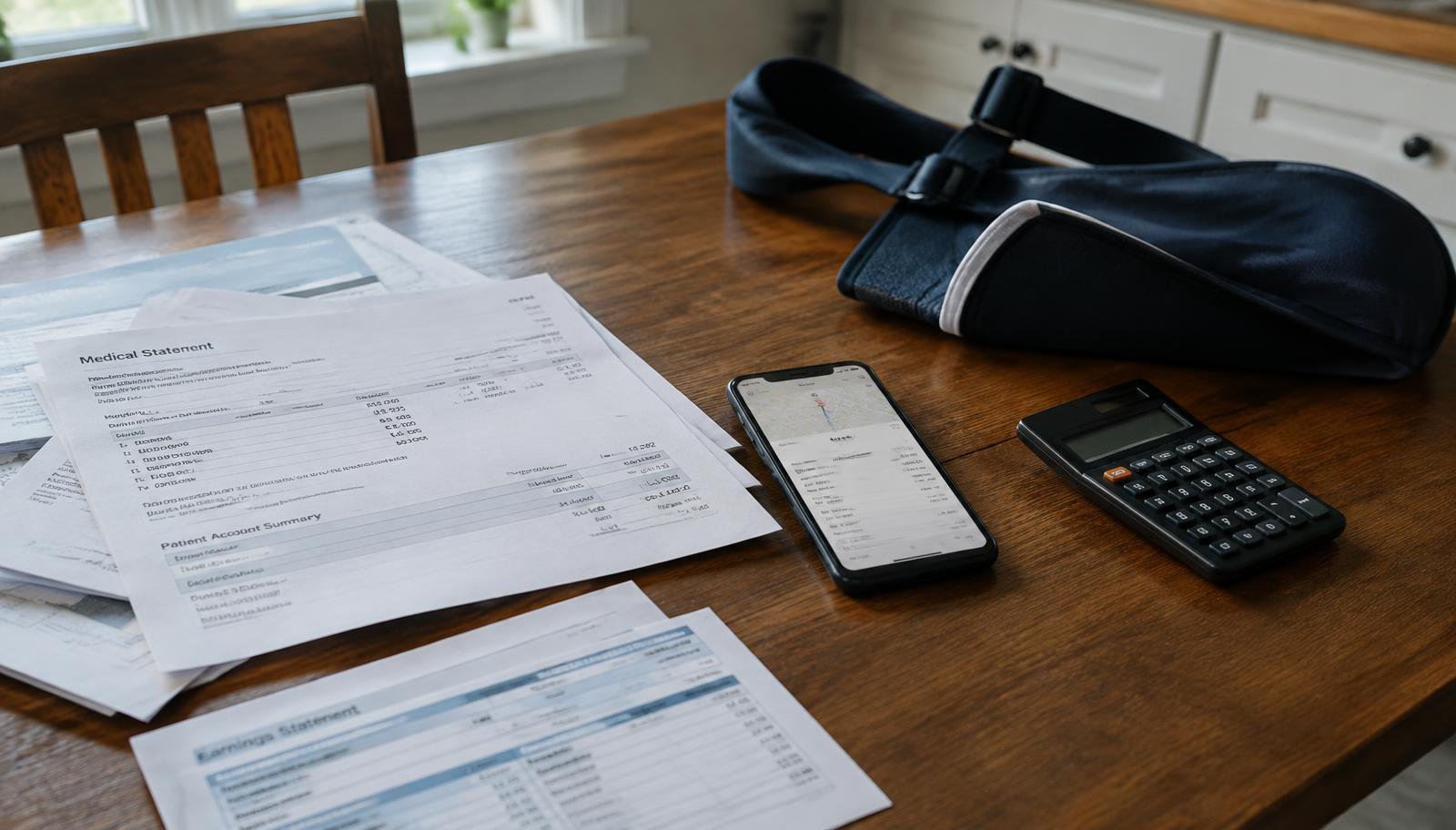
Screenshot the trip in the app, get the police report number, get medical care quickly and follow through with it, and keep every bill and record of missed work. Don't give a recorded statement to the other side's insurer before you have advice. Our step-by-step guide covers it: What to do after an Uber or Lyft accident in New Jersey.
Every case is different, and nothing here guarantees a result. For a free review of your Uber or Lyft claim, call 1-833-I-KNOW-DENNIS or see our Uber and Lyft accident page.