

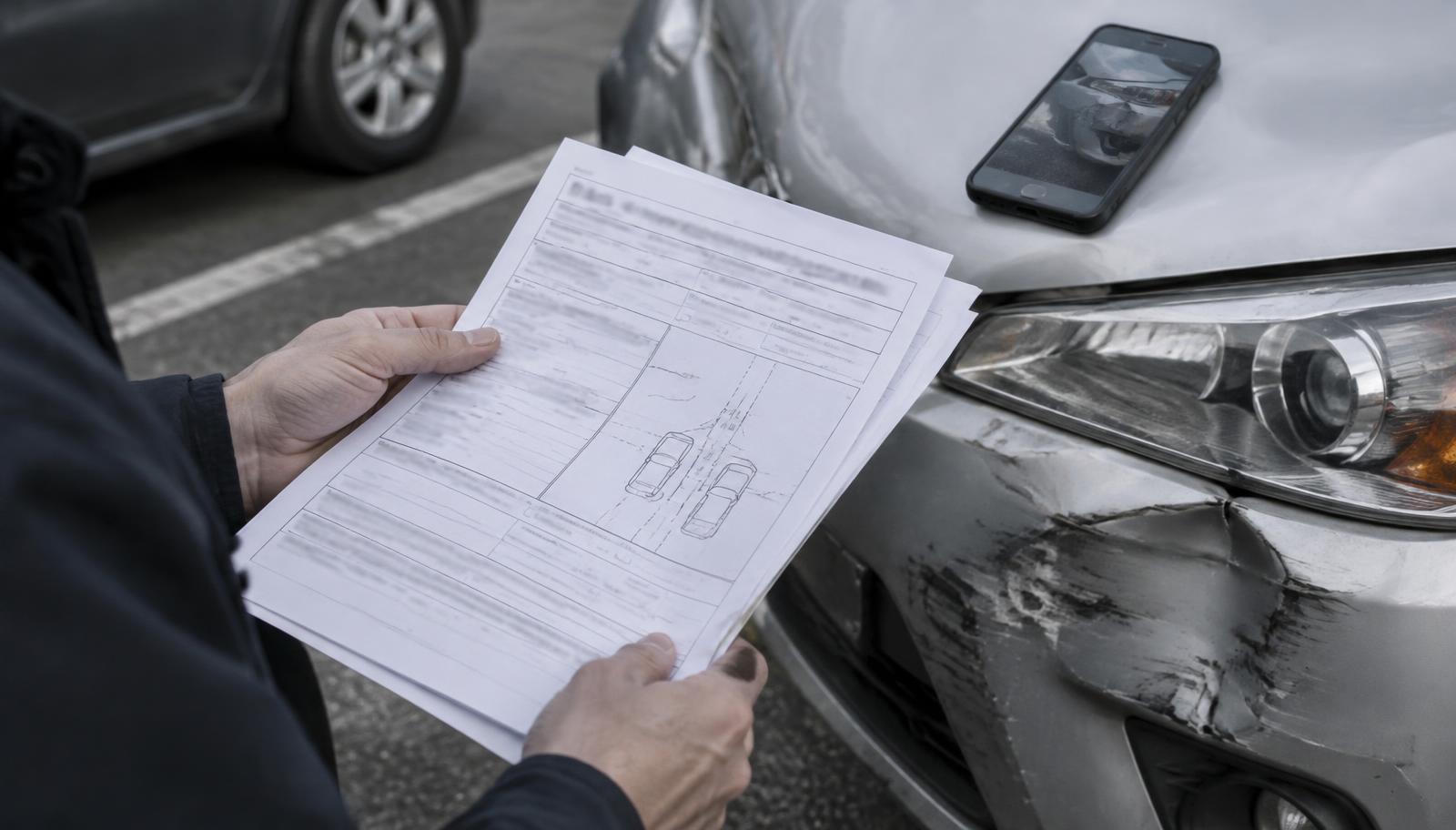
After a hit-and-run, the police crash report is often the single most important document you have. With no other driver to claim against, your own insurance company, or the state's Unsatisfied Claim and Judgment Fund, will want proof that the crash happened, that it was reported, and that the other driver couldn't be found. Here is how to get that report in New Jersey, step by step.
Key facts
- Report the crash to the police right away. Drivers must report crashes involving injury, death or more than $500 in property damage (N.J.S.A. 39:4-130).
- The report comes from the department that responded: your local police for most town streets, the New Jersey State Police for the Turnpike, Parkway and many state highways.
- State Police reports are ordered online through the State's crash report portal: $13 for most roads and $5 for Turnpike and Parkway crashes.
- Reports usually aren't available until they're completed and approved, which can take up to about 14 business days.
- If you may need the Unsatisfied Claim and Judgment Fund, written notice is due within 180 days of the crash (N.J.S.A. 39:6-65).
Step 1: Make sure a report exists
A report can only be requested if the police wrote one. If the driver fled, call 911 from the scene if you can. If you couldn't, because you were taken to the hospital or didn't realize you were hurt, contact the police department for the area where the crash happened as soon as possible and ask to make a report.
When you speak with the officer, give every detail you remember about the other vehicle: color, make, model, partial plate, damage, direction of travel, and anything about the driver. Ask for the case or report number and the officer's name and badge number before you leave. You will need the case number to find the report later.
Why this matters so much: to recover from the Unsatisfied Claim and Judgment Fund for a hit-and-run, a court must be satisfied that all reasonable efforts were made to identify the vehicle, owner and driver (N.J.S.A. 39:6-78). A prompt police report is the foundation of that showing. Insurance policies also commonly require that a hit-and-run be reported to police, so check your policy's terms.
Step 2: Figure out which department has it
- Town or city streets: usually the municipal police department.
- New Jersey Turnpike and Garden State Parkway: the New Jersey State Police.
- Interstates and state highways: often the State Police, but local police handle many crashes on state routes inside towns. If you're not sure, call the local department first.
- Atlantic City Expressway: reports are requested in writing from the Atlantic City Expressway Authority, not through the State Police portal.
Step 3: Request the report
New Jersey State Police reports
The State Police offer an online crash report service through the state's official NJ portal. You can search by case number, license plate number or driver's license number. As of this writing, the State Police list these fees:
- $13 for a crash report on a non-toll road.
- $5 for a New Jersey Turnpike or Garden State Parkway crash report.
The report becomes searchable only after it is completed and approved, which the State Police say can take up to 14 business days. You'll get an email when it's ready to download. Reports are kept for six years from the year of the crash. Fatal crashes on the Turnpike and Parkway are handled differently: those reports are requested from the New Jersey Turnpike Authority through its public records request form.
Local police department reports
Each department sets its own process. Many let you download reports online, often through a vendor service linked from the department's website. Others require a request at the records window or a written request. Bring or provide the case number, the date and location of the crash, and your ID. Fees vary by department.
What the basic report does and doesn't include
The basic report is the standard NJTR-1 crash report form. For serious or fatal crashes, police often prepare additional investigation materials, such as photos, statements and reconstruction reports. The State Police say those materials aren't public records and require a subpoena or court order. That's something a lawyer can handle. See our guide on how to read a police report.
Step 4: Check the report for mistakes
Read the report as soon as you get it. In a hit-and-run, look closely at:
- Whether the narrative says the other driver left the scene, and describes the other vehicle the way you did.
- Your contact information, insurance and injury code. A "no apparent injury" box doesn't mean you weren't hurt, but you want your symptoms recorded accurately.
- The date, time and location, which your insurer and the Fund will compare with your medical records.
If something is wrong, contact the officer or the department's records unit. Officers often can't change their opinions, but they can correct factual errors or add a supplemental statement.
Step 5: Keep the investigation going
A police report isn't the end of the search for the driver. Leaving the scene of a crash that injures someone is a serious offense in New Jersey (N.J.S.A. 39:4-129), and police may keep investigating. Meanwhile:
- Ask nearby businesses and homes about cameras right away. Many systems record over themselves within days.
- Check social media and neighborhood apps for anyone who saw the crash or the car.
- Give the police any new lead, and write down the date you did.
Each of these steps also helps show the "reasonable efforts" to identify the driver that the Fund requires.
Who pays after a hit-and-run
- Your medical bills: usually your own PIP coverage, or PIP from a household family member's New Jersey auto policy, including when you were hit as a pedestrian (N.J.S.A. 39:6A-4). New Jersey PIP explained.
- Pain and suffering and other losses: usually your own uninsured motorist (UM) coverage, which New Jersey auto policies must include (N.J.S.A. 17:28-1.1).
- If no policy applies: the Unsatisfied Claim and Judgment Fund may be available. It requires a Notice of Intention to Make a Claim within 180 days of the crash (N.J.S.A. 39:6-65), and it excludes certain people, such as owners of uninsured vehicles (N.J.S.A. 39:6-70).
Hit by a hit-and-run driver while riding in an Uber or Lyft? The rideshare policy may also apply. Rideshare crashes with hit-and-run drivers.
Deadlines
The police report should be made as soon as possible. Notice to the Fund is due within 180 days. Your own UM policy will have its own notice requirements, and an injury lawsuit generally must be filed within two years (N.J.S.A. 2A:14-2). New Jersey filing deadlines.
See our hit-and-run accident page, or call for a free consultation. We can request the report, track down camera footage and put every insurer on notice while you recover.