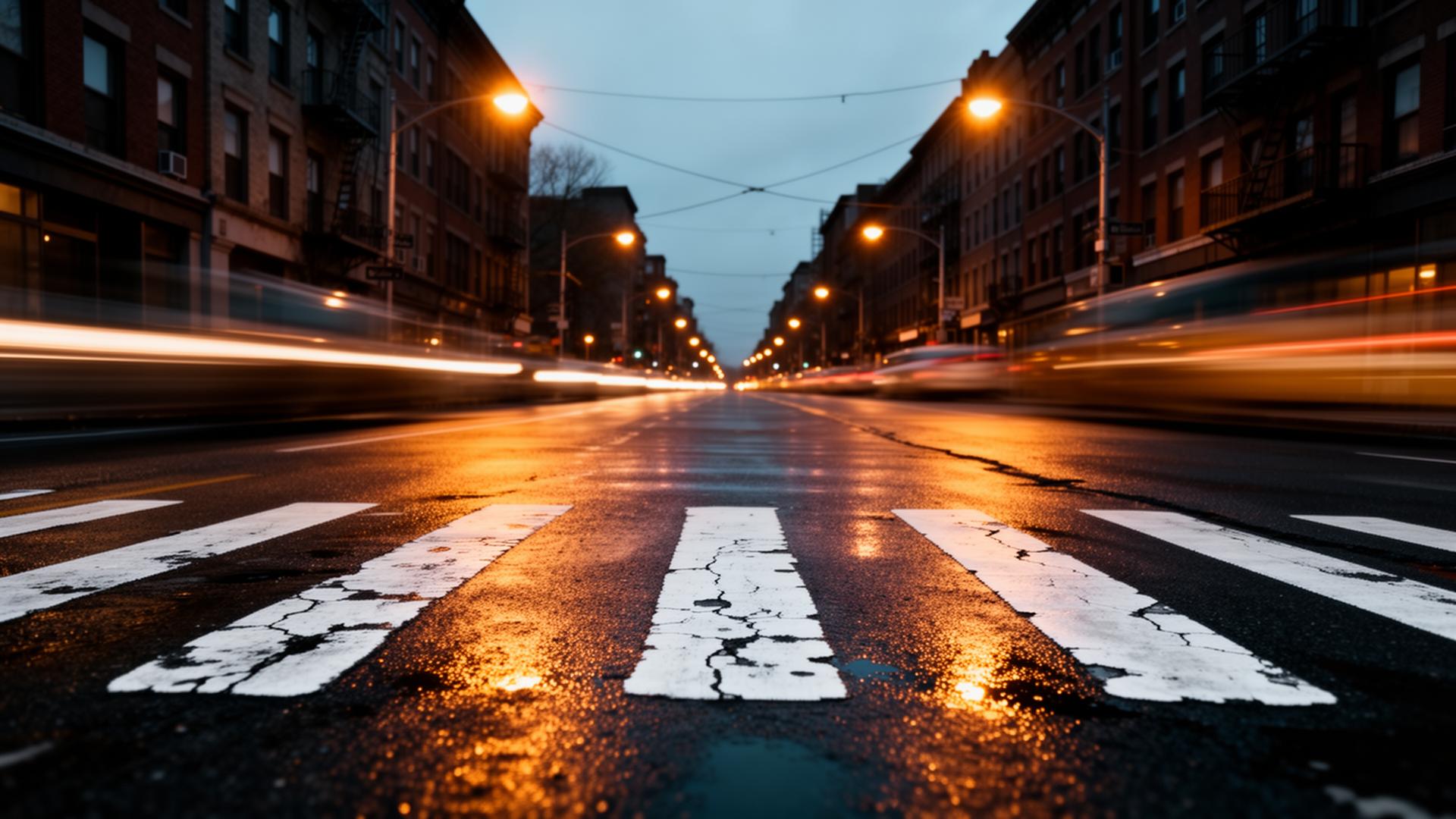
New Jersey has some of the strongest pedestrian protection laws in the country, and still sees far too many pedestrian deaths every year. Pedestrians don't always have the right of way, but in a crosswalk, drivers have a duty most people don't realize: they must stop and stay stopped.
The crosswalk rule: stop and stay stopped
Under N.J.S.A. 39:4-36, a driver must stop and remain stopped to let a pedestrian cross in a marked crosswalk. Under the New Jersey Attorney General's Traffic Safety Bulletin, that applies when the pedestrian is within the half of the roadway the vehicle is traveling in, or within one lane of it. This applies at both controlled intersections and uncontrolled ones. Drivers must also yield to pedestrians in unmarked crosswalks at intersections. A driver may not pass another car that's stopped for a pedestrian in a crosswalk.
Where pedestrians must yield
Pedestrians have duties too. Under the same statute, a pedestrian outside a marked or unmarked crosswalk must yield to vehicles, and no pedestrian may suddenly leave a curb into the path of a vehicle so close that the driver can't stop. Where traffic signals or "Walk/Don't Walk" signals control an intersection, pedestrians should follow them.
Right of way doesn't decide everything
Even when a pedestrian didn't have the right of way, the driver still owes a duty of reasonable care. Drivers are expected to watch for people, slow down near schools, parking lots, and bus stops, and avoid hitting someone who's visible in the road. Under New Jersey's comparative negligence law, a pedestrian who crossed mid-block can still recover if the driver was more at fault, for example a speeding, texting, or impaired driver. The recovery is reduced by the pedestrian's share of fault.
Other laws that protect people on foot
- Safe Passing Law (N.J.S.A. 39:4-92.4, effective March 1, 2022): drivers must move over a lane when possible when passing pedestrians, cyclists, and other vulnerable road users. If they can't, they must leave at least four feet and slow down.
- Hands-free driving: New Jersey bans using a handheld phone while driving (N.J.S.A. 39:4-97.3).
- Parking lots: drivers in lots and driveways still must use reasonable care for pedestrians.
Who pays a pedestrian's medical bills
A New Jersey resident hit by a car usually gets PIP benefits from their own auto policy or a household member's. If no one in the household has a car policy, the PIP coverage of the vehicle that hit them typically applies. If that's not available, a claim may go to the Unsatisfied Claim and Judgment Fund. PIP explained.
Pain and suffering
A pedestrian's claim for pain and suffering is against the driver's liability insurance. If the pedestrian has their own car policy with the limitation-on-lawsuit option, the verbal threshold may apply. Pedestrian injuries are often severe, including fractures, head injuries, and leg injuries, and frequently meet the threshold.
Hit-and-run pedestrian accidents
If the driver flees, report it to police immediately. Your own uninsured motorist coverage, or a household member's, may cover your injuries. If no one in your household has auto insurance, the Unsatisfied Claim and Judgment Fund may help. Prompt reporting is required. More on hit-and-runs.
Government vehicles and dangerous roads
If a NJ Transit bus or municipal vehicle hit you, or a dangerous crosswalk design contributed, you may need to file a notice of claim within 90 days. Read about claims against public entities.
What to do after being hit
- Call 911 and accept medical care.
- Get the driver's information and plate number, or a photo of the car.
- Get witness names. Pedestrian cases often depend on independent witnesses.
- Photograph the crosswalk, signals, lighting, and where you landed.
- Note cameras nearby, such as stores, buses, and traffic cameras.
See our pedestrian accidents page.