Exsanguination means severe blood loss: losing so much blood that the body can no longer keep the heart, brain and other organs supplied with oxygen. When a medical examiner lists it as a cause of death, families often have questions about what it means and whether the death could have been prevented. This guide explains the term in plain English and how it can come up in a New Jersey wrongful death or injury case.
The short version
- Exsanguination is death or near-death from blood loss, often called "bleeding out."
- In accidents it usually follows damage to a major blood vessel or to organs such as the liver or spleen, or a pelvic or thigh-bone fracture.
- It can happen internally, with little or no visible bleeding.
- In New Jersey, a family may bring a wrongful death claim (N.J.S.A. 2A:31-1) and a survival claim (N.J.S.A. 2A:15-3), generally within two years.
What the word means
The word comes from Latin: ex (out) and sanguis (blood). Doctors use "hemorrhage" for bleeding in general. "Exsanguination" describes the most severe end of that range, when blood loss is so great that circulation fails. An average adult has roughly five liters of blood. Trauma doctors classify hemorrhage by how much of that volume is lost; once losses pass about 40%, the condition is immediately life-threatening without rapid treatment.
How it happens in accidents
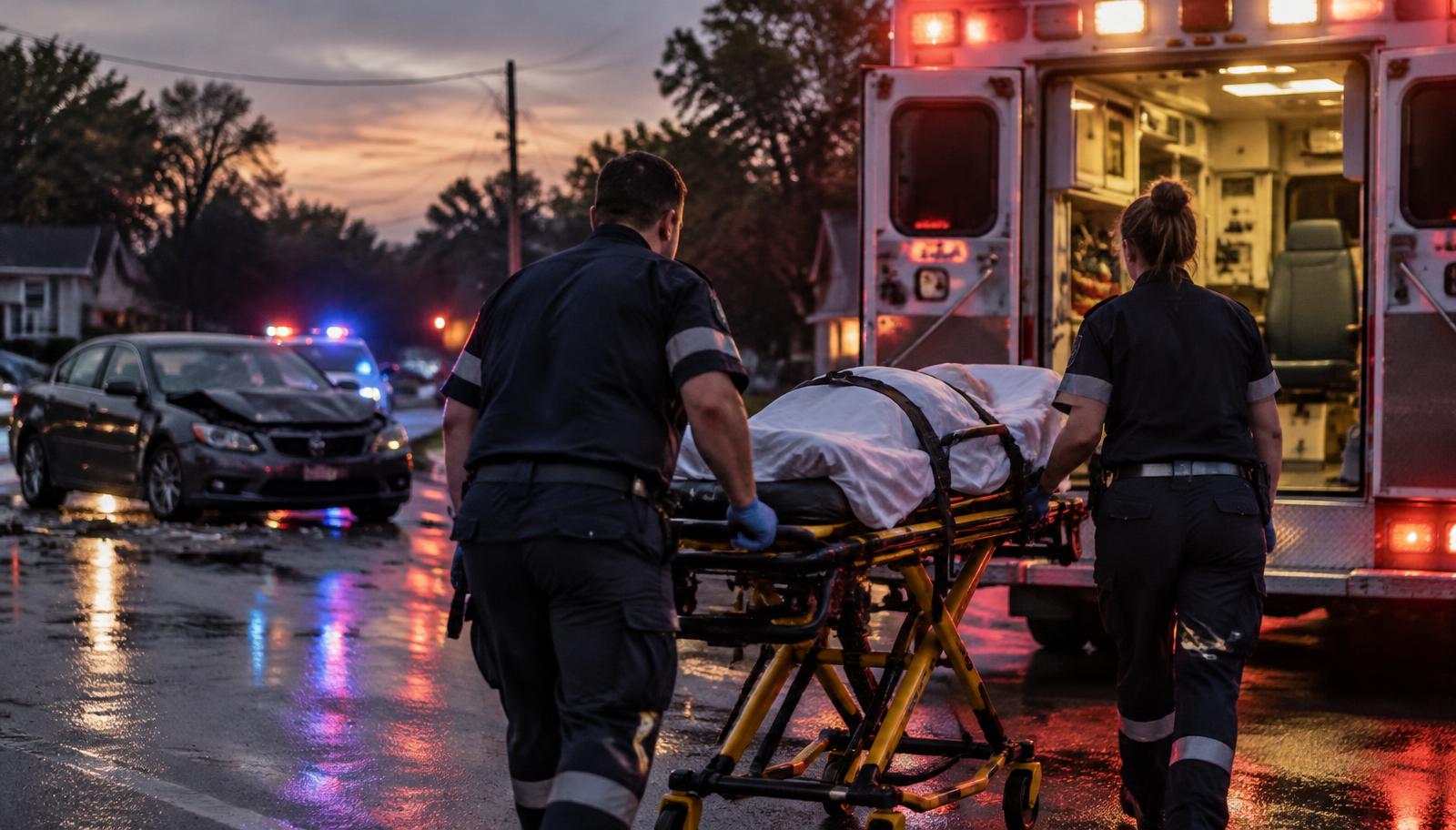
- Car, truck and motorcycle crashes: high-energy impacts can tear the aorta or other large vessels, lacerate the liver or spleen, or fracture the pelvis.
- Pedestrian and bicycle collisions: leg and pelvic fractures can damage the femoral artery and nearby vessels.
- Industrial and construction accidents: machinery, falls and crush injuries can cause deep wounds or amputations.
- Medical care: bleeding during or after surgery, or bleeding from a missed internal injury.
Internal bleeding is the dangerous one. A person can walk and talk at the scene while bleeding into the abdomen or chest, then decline quickly.
Warning signs of serious bleeding
Call 911 for anyone injured who shows signs such as:
- Bleeding that won't stop with firm pressure, or blood that spurts
- Pale, cold or clammy skin
- A fast heartbeat and fast, shallow breathing
- Confusion, extreme thirst, dizziness or fainting
- A swollen, rigid or painful abdomen after a crash
Uncontrolled bleeding is one of the leading causes of preventable death after injury. That is why the national "Stop the Bleed" program trains ordinary people to apply pressure, pack wounds and use tourniquets until help arrives.
When a death may have been preventable
A legal claim depends on whether someone's carelessness caused the injury, delayed treatment, or both. Questions a lawyer will look at include:
- Who caused the injury? A negligent or impaired driver, an unsafe worksite, a dangerous product.
- How fast did help arrive? Response times and any delays at the scene.
- Was the bleeding recognized? Whether hospital staff ordered the right scans, monitored vital signs and called a surgeon in time.
- Was the patient sent home too early? Missed internal injuries are a known source of malpractice claims.
A claim against a doctor or hospital in New Jersey requires an affidavit from a qualified medical expert early in the case (N.J.S.A. 2A:53A-27). See what an affidavit of merit is.
The medical examiner's report
New Jersey law requires the medical examiner to investigate deaths caused by violence or accident, and sudden or unexplained deaths (N.J.S.A. 52:17B-86). The autopsy report usually states the cause of death (for example, exsanguination from a torn blood vessel) and the manner of death (such as "accident"). The report, hospital records, EMS run sheets and the police crash report are usually the core evidence in a wrongful death case. A family member or the estate's representative can usually request the report from the county or regional medical examiner's office.
Two claims a family can bring
The wrongful death claim
Under New Jersey's Wrongful Death Act (N.J.S.A. 2A:31-1 to -6), the claim is filed by an administrator ad prosequendum appointed by the Surrogate (N.J.S.A. 2A:31-2), on behalf of the family members who depended on the person who died. It compensates for financial losses: lost income and support, and the value of household services, care, guidance and advice the person would have provided.
The survival claim
Under the Survival Act (N.J.S.A. 2A:15-3), the estate can recover what the person could have recovered had they lived, including conscious pain and suffering between the injury and death, plus medical and funeral costs. With blood loss, the time a person was conscious and aware can matter a great deal, and EMS and hospital records are often the best proof of it.
Read our full guide to wrongful death lawsuits in New Jersey.
Deadlines
A wrongful death action generally must be filed within two years of the date of death (N.J.S.A. 2A:31-3). If a public entity, such as a town, county or NJ Transit, may be responsible, a notice of claim is generally due within 90 days (N.J.S.A. 59:8-8). See all New Jersey deadlines.
What families can do now
- Ask for copies of the autopsy report, death certificate and police report.
- Keep every document from the hospital, EMS and insurers.
- Don't give statements to an insurance company about the accident.
- Keep any vehicle or product involved. Don't let it be repaired or scrapped.
- Talk to a lawyer about getting appointed as administrator ad prosequendum and preserving evidence.
This article explains a medical term for families and is not medical advice. Dennis Shlionsky represents families in wrongful death cases across New Jersey, and consultations are always free.