
Back injuries are among the most common, and most disputed, injury claims in New Jersey. They come from car crashes, falls, lifting at work and construction accidents. This guide explains the types of back injuries, which insurance pays for what, and how to prove a back injury claim.
Where the money comes from
- Car crash: your own PIP pays medical bills first (N.J.S.A. 39:6A-4); a claim against the at-fault driver covers pain and suffering, subject to the lawsuit threshold.
- Hurt at work: workers' compensation pays medical care and wage benefits (N.J.S.A. 34:15-1 and following); a separate claim may exist against a non-employer.
- Fall on someone's property: a premises liability claim against the owner or business.
Common back injuries in accident cases
- Sprains and strains of the muscles and ligaments, often from whiplash-type motion or lifting.
- Herniated or bulging discs, where disc material presses on nearby nerves.
- Radiculopathy, nerve irritation that causes pain, numbness or weakness in the arms or legs, sometimes called sciatica in the lower back.
- Vertebral fractures, including compression fractures.
- Spinal cord injuries, the most serious category, which can cause partial or complete paralysis.
Proving the injury
A back injury claim rises or falls on medical evidence. The defense will look for any reason to say your symptoms came from age, an earlier injury or something other than the accident.
- Prompt treatment. An emergency room or urgent care visit, or seeing your doctor within days, links the injury to the accident.
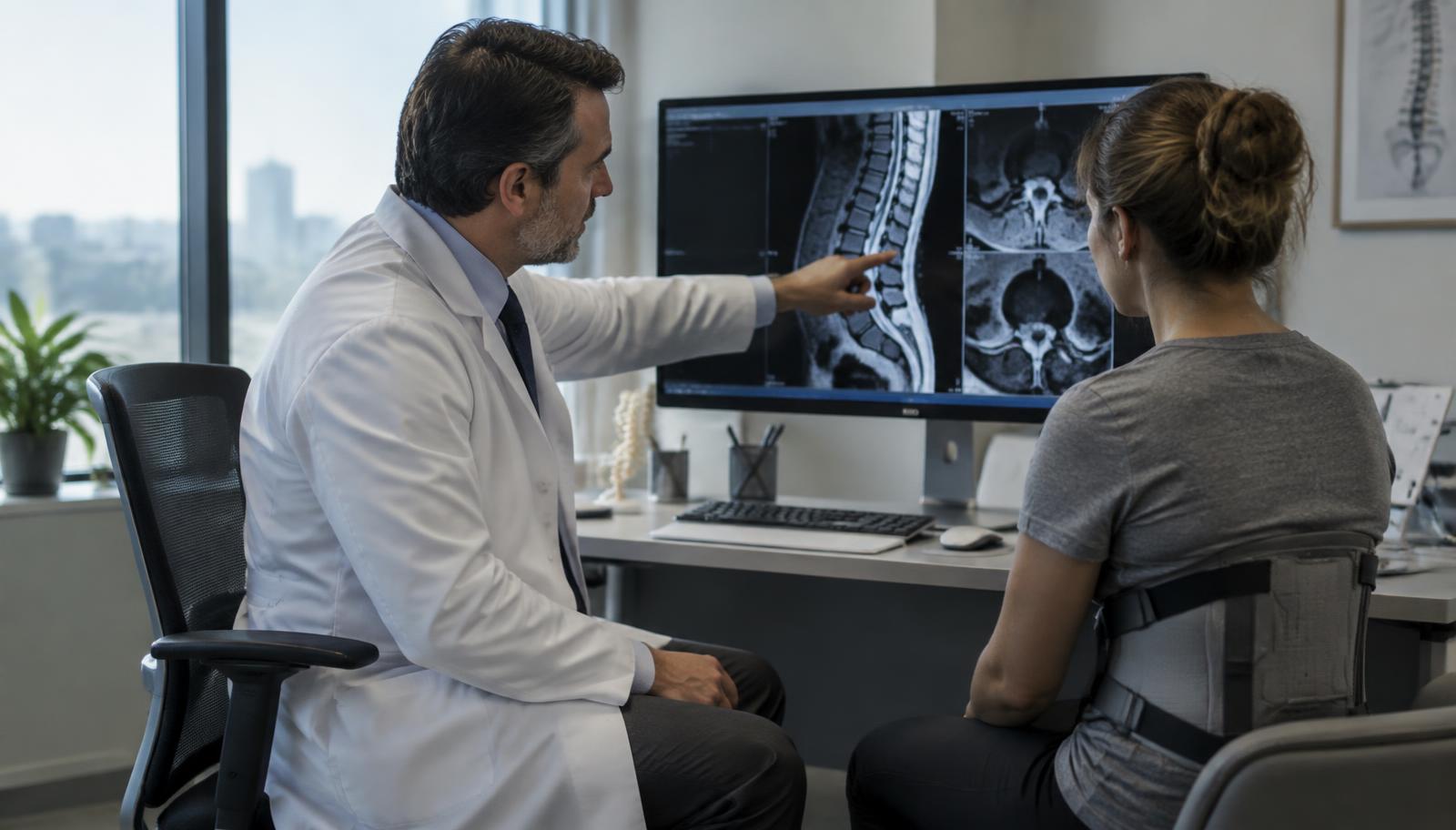
- Imaging. X-rays rule out fractures; MRI shows discs and nerves; EMG/nerve conduction studies show nerve damage.
- Consistent records. Your complaints should be documented the same way across doctors and therapists.
- A causation opinion. A treating doctor or expert explains why the accident caused, or worsened, the injury. If you had earlier back problems, see how pre-existing conditions affect a claim.
Car accident back injury claims
New Jersey is a no-fault state, so your PIP coverage pays medical bills regardless of fault. To recover pain and suffering from the at-fault driver, a policy with the "limitation on lawsuit" option requires an injury that meets N.J.S.A. 39:6A-8(a), usually a permanent injury proven with objective clinical evidence. See the serious injury threshold.
Work-related back injury claims
If you hurt your back on the job, workers' compensation is generally your remedy against your employer, regardless of fault. It covers authorized medical treatment, temporary disability benefits while you can't work, and permanent disability benefits based on lasting impairment. See how New Jersey workers' comp works. If someone other than your employer caused the injury, such as a driver, a property owner or an equipment maker, you may also have a third-party lawsuit.
Slip, trip and fall back injuries
Falls on wet floors, broken stairs and icy walkways frequently cause disc injuries and compression fractures. The claim is against the property owner or business that failed to keep the property reasonably safe. Snow and ice cases have their own rules: see snow and ice falls in New Jersey. Falls on public property require a notice of claim within 90 days: see Tort Claims Act deadlines.
What a back injury claim can include
- Past and future medical expenses not covered by PIP or other benefits.
- Lost wages and loss of future earning capacity.
- Pain and suffering, and loss of enjoyment of life.
- Household help and other out-of-pocket costs.
Health insurers, PIP carriers and workers' comp carriers may have liens on part of a recovery, which affects what you actually take home.
Surgery or no surgery
Many back injury claims resolve without surgery. If that's your situation, read back injury settlements without surgery.
Deadlines
Most New Jersey injury lawsuits must be filed within two years (N.J.S.A. 2A:14-2). Workers' compensation claims have their own deadlines, generally two years from the accident or the last payment of compensation (N.J.S.A. 34:15-51). Don't wait to get advice.
General information about New Jersey law, not legal advice for your situation.